Showing posts with label Game of Thrones. Show all posts

Friday, July 8, 2016

What If Rhaegar Killed Robert?


In the ASOIAF series Robert's Rebellion is arguably the most important event prior to the first book. The civil war which brought down the 300 year old Targaryen Dynasty laid the foundation for the entire book series and show. Without this successful insurrection, nearly every character in the series would be in a different place. 


But what if the rebellion's climactic battle, The Trident, had gone a different route? What if in their duel in the waters, Robert was slain by Rhaegar and the rebel forces suffered a shattering defeat? How would the Seven Kingdoms be different? 


The Trident


There are a myriad of ways that the Rebellion could have ended with a Targaryen victory. For my purposes I'll be looking at a different outcome for the Battle of Trident with all other events leading up to that point unchanged. 


A different man comes back from the Trident


In this new scenario, Rhaegar leads the loyalist army into battle and confronts Robert one on one in the waters of the river. This time though, Robert misses his swing and Rhaegar dodges the fatal blow of the Usurper's warhammer. Rhaegar rebounds and puts his sword through Robert's antler helm killing him instantly. 


Upon seeing their leader fall, the rebel army reacts in the same way that the loyalist army did in the cannon history at the death of Rhaegar. The Baratheon, Stark, Tully and Arryn forces scatter and their enemies are victorious. 


Immediate Aftermath


A victory for the Targaryens at the Trident has very deep changes for the Kingdoms and for the characters of the series. 


First, with the rebels clearly on the backfoot the loyalists are free to press their advantage and continue to march into the Riverlands. Neutral houses, seeing which way the wind is turning, declare for the Targaryens. The Freys, who in the cannon waited to send troops to the Trident after the battle is decided, join the Royal Army along with other Riverlords.

House Lannister, declares for the crown and sends their armies into the Riverlands to assist. 


Meanwhile, in Storm's End the siege continues and the Tyrells eventually starve the garrison led by Stannis. The elder of Robert's two brothers is killed or captured while the youngest brother Renly is (for sure) taken hostage to ensure the loyalty of the Stormlands. With Robert gone, the Stormland forces in the Riverlands disintegrate leaving the Arryns, Starks and Tullys to try and mount a new defense. 


The Mad King Falls


As revealed by Jaime in A Feast for Crows, Rhaegar stated before leaving for the Trident that he wanted to call a council after the battle was over. In his own words:


'When the battle's done I mean to call a council. Changes will be made. I meant to do it long ago, but ... well, it does no good to speak of roads not taken. We shall talk when I return.' 


The council Rhaegar referred to is likely a council to remove his father, Mad King Aerys, from power. POV chapters from other characters in the books indicate that Rhaegar was disturbed by his father's madness and wanted to depose him in order to preserve the Kingdoms. The tourney at Harrenhal (where Rhaegar met Lyanna Stark) was believed by some in the books to have been a cover for a meeting between Rhaegar and supporters to plot Aery's overthrow. Aerys was tipped off, however, by his spymaster Varys. He attended the tournament and, as the story goes, the plot never hatched.


In this new scenario, Rhaegar takes advantage of his victory and finally calls the long delayed council. He gathers his strongest supporters and his father's closest enemies. This includes Aery's former estranged Hand and friend Tywin Lannister. In the cannon timeline, Tywin's friendship with Aerys was ruined by the Mad King's jealously and paranoia, with Tywin resigning his post. It's also recorded that during the defiance of Duskendale, Tywin openly talked about replacing Aerys with Rhaegar. 

 
At Rhaegar's council, Tywin becomes a crucial player.


At the council, most likely held in the Riverlands (perhaps Harrenhal), Tywin and Rhaegar's allies back his coup against his father to spare the realm even more bloodshed.


Rhaegar leaves Barristan Selmy or another lord to lead part of the Royal Army in the Riverlands and continue the right against any remaining rebel forces. He and Tywin though take the lion's share of the army to King's Landing.


While Rhaegar may try to disguise this move, Aerys's paranoia, perhaps coupled with information from Varys, prevents him from accepting his son back into the capital. He keeps the gates of King's Landing shut and threatens to kill Rhaegar's wife and children (who are still in the Red Keep). The Mad King also has the caches of wildfire scattered around the city which he plans to use in this timeline as well.


Though the standoff continues for some time, the outcome probably remains very much the same as in the cannon-timeline.


Jaime Lannister remains the only Kingsguard in the Red Keep, since he was left behind before the battle. Though he is a Kingsguard, it's also established in the books that he had a close relationship with Rhaegar and that he is not above breaking vows for what he perceives as a greater good.


With that mind, it's possible that Jaime would, eventually see the writing on the wall and take it upon himself to spare the city and his father's forces.


The Mad King falls, most likely stabbed once more by Jaime. 


King's Landing is spared being sacked or burned and Rhaegar becomes king.


The Peace


With Rhaegar now King and his father gone, the new Targaryen monarch begins the process of bringing all seven kingdoms under his control.


With the Stormlands all but secured by the Tyrells, the Riverlands, the Vale and the North are the only three territories left uncontrolled by the new Dragon King. 


House Arryn, House Stark and House Tully form the backbone of the rebels


Rhaegar would no doubt hear a number of different opinions from his small council on how to deal with these rebellious territories. While an all out military invasion of these lands would be possible, especially with the Royal Army intact, continuing the war would be problematic. Apart from the Riverlands, which have few natural barriers, the North and the Vale would prove difficult to invade and conquer by force.


The Vale is extremely mountainous while the North is huge (as large as all the other kingdoms combined). Though the forces of the Great Houses backing Rhaegar could mount invasions of these two kingdoms, the campaigns would cost a number of lives and could ultimately result in a war of attrition that might cause the loyalists to suffer burnout.


Therefore, Rhaegar's best course of action would be to negotiate the reentry of the North and the Vale into the Seven Kingdoms.


This might seem like an impossible task at first, especially when it comes to making amends with House Stark. After all, Rhaegar's absconding with Lyanna Stark was the flash that ignited the rebellion in the first place. How could Ned Stark (assuming he escaped the defeat at the Trident) or his brother Benjen (who would have become lord of Winterfell had Ned fallen) possibly make peace with the man who 'abducted' their sister? How could Ned, if he survived, have forgiven the man who in this alternate timeline, killed his best friend?


Well a negotiated peace, is actually not as crazy an outcome as you might think. In this alternate timeline, Rhaegar has two aces in his already stacked deck.


First, there's the fact that Rhaegar's dalliance with Lyanna, wasn't really what started the rebellion.


Sure, taking off with Robert's fiance was a dumb move. Whether you like the abduction narrative or the star crossed lover story, there's no doubt Rhaegar made a mistake when he rode away to Dorne with Lyanna. Yet it was the actions of Rhaegar's father, the Mad King, that actually set off the war. 


The Mad King burns Rickard Stark


Brandon Stark, the heir to Winterfell, and Rickard Stark, (the Stark patriarch) were both executed when they approached Aerys seeking justice for what they saw as a slight on their family's honor. It's their deaths at the hands of Aerys, and his subsequent order for Jon Arryn to send him the heads of Ned and Robert, that kicked off the rebellion. Though negligent, Rhaegar had no direct responsibility for the war.


With his father now dead, in this alternate timeline, Rhaegar can argue that he actually avenged the Stark family by deposing his father and bringing the man responsible for Brandon and Rickard's deaths to justice. With the Mad King gone, the rebels no longer have a hated figure to rally against. Though Rhaegar is his father's son he's also well loved.


Despite being on the losing end of the war in the cannon-timeline, Rhaeagr is still widely praised even in death for his honor and noble character. Apart from Robert, everyone else who knew the prince personally remarks on how good a person he was and laments that he never got a chance to be King. Even Ned speaks well of him, despite having no apparent reason to.


Second, and maybe most importantly, Rhaegar has a Stark in his care. I don't mean Lyanna. Just like in the books, Lyanna dies at the Tower of Joy in her bed of blood. And she also gives birth to the boy we all know as Jon Snow. (Yes, there may be a half percentage chance that R + L does not equal J but at this point the show has almost certainly confirmed it). 


Unfortunately, Lyanna Stark still dies in childbirth.


In this alternate version though, Jon is given a Targaryen name (I'll use the popular fan name Jaehaerys) and is taken back to his father by the three Kingsguards left to protect him and his mother in Dorne. 


It's the revelation of this little boy's existence, more than anything else, that convinces either Ned or Benjen to submit to Rhaegar's rule. While the Starks may nurse strong grudges against Rhaegar for the rest of his life, they would still feel a strong devotion to Lyanna's son. Ned's code of honor and his dedication to family, would ultimately bring him to the table and back to submission to the Targaryens. While Benjen is not quite as honor bound as Ned is, we can safely assume that he would also submit.


Assuming the North is brought back to the fold the Vale and the Riverlands would then follow suit, seeing no purpose to continuing the fight. The Arryns remain in charge of the Vale and the Tullys, the Riverlands. Rhaegar lacks his father's penchant for cruelty and would most likely not seek any vengeance. 


The Rule of Rhaegar


With the Kingdoms at peace, the reign of King Rhaegar truly begins. Though the rebellious lands are pacified, bitterness over the events of the rebellion would no doubt remain. Though their houses remain intact, the Baratheons and the Starks would have grudges against the throne. They, the Arryns and Tullys, as well as other large houses that supported Robert, would need to be kept in check. Children from those houses would stay in King's Landing, Dragonstone or in loyalist Great Houses, as hostages. The best candidates would be the heirs of these houses such as Robb, Renly, Robert Arryn and Edmure Tully. Renly, as the heir of Storm's End, would be an especially valuable captive to the new Targaryen king.


Prince Jaehaerys Targaryen


Jaehaerys (Jon Snow) also serves as a sort of hostage against any future Stark rebellions. Though regarded as a bastard, Rhaegar legitimizes his son through Lyanna Stark (as King he has that power). This is done out of a sense of honor but also as a way to empower House Stark, who would have a blood relative as a Prince. Additionally, legitimizing Jaehaerys and making him a Targaryen prince would allow Rhaegar to add another head to the dragon as part of his plans to fulfill the Prince Who Was Promised prophecy.


Despite his legitimization, Jaehaerys would still probably be considered a bastard by many in the Court. He would also not be his father's heir since Rhaegar's children through Elia Martell would still be alive. The eldest son through Elia, Aegon, would still be first in line for the throne.


While it's not clear how well Elia would have accepted her husband's love child, we can assume that she would have certainly been uneasy and most likely wouldn't regard him with the same affection as her own children. She might even come to see him as a threat to her own son's succession.


The Mad King's wife, Rhaella, survives only long enough to die giving birth to Daenerys. In this world, the Mother of Dragons, never crosses the narrow sea and does not become the BA heroine we know in the books and show. Instead, she grows up a princess and is most likely wed to one of her male relatives as per Targaryen tradition. While her brother Viserys or her cousin are prime candidates, she may also be married off to loyalist house as a reward for their support during the war. 


Rhaegar reigns well, and the Targaryen Dynasty endures. House Baratheon is left extremely weakened, but intact, while Houses Martell, and Tyrell are empowered for their loyalty. The Lannisters, due to Tywin's support for Rhaegar's council, are also close to power. Though Tywin does not initially have the same leverage over the throne as in the canon story, he is rewarded with a seat on the small council. Likely Rhaegar's first hand is his close friend Jon Connington, who he brings back from exile.


Cersei marries someone else while Jaime remains in King's Landing as a Kingsguard for Rhaegar. Likely they never have children.

Ned remains Lord of Wintefell and has his family with Catelyn. He is kept far away from King's Landing however with his daughter's likely married. The war continues to haunt him, much like it does in the books. 


Tuesday, July 5, 2016

What If Stannis Won the Iron Throne?


In a news series of posts, I'd like to take a look at 'What if?' scenarios related to GRR Martin's Song of Ice and Fire. 


For the first of many entries, I though I'd look back on Stannis Baratheon's failed campaign for the Iron Throne in book two. The questions I want to answer are: How could Stannis have succeeded in capturing the Iron Throne? How would the War of the Five Kings have played out if he had? And finally, would his reign have lasted? 


How Could Stannis Win The Throne? 


First, we need to look at the factor that contributed the most to Stannis' failure: his relationship with his brother Renly. In A Clash of Kings, Stannis' claim is weakened when his younger, and more popular brother, Renly also declares himself king. Bannermen in the Stormlands who would have joined Stannis' cause are taken away from him. This prompts his use of Melisandre's black magic to assassinate Renly and steal his bannermen. 


Renly's support was essential to secure the throne for Stannis.

Renly's death however eventually comes back to bite Stannis in the ass. The Tyrells, Renly's wealthy and powerful allies through his marriage to Margaery, don't join Stannis' cause. Instead they make a new alliance with the Lannisters. Their military forces, combined with Tywin Lannister's army, arrive at the last minute during the battle of Blackwater Bay. King's Landing is saved from Stannis' and the last remaining Baratheon brother loses his bid for power.

In this alternate timeline, however, Renly does not declare his kingship and instead throws his weight behind Stannis. Stannis, who knows that his brother still desires power, agrees to make Renly his hand and appoints him as his heir. The diminished likelihood of Stannis producing his own son (thanks to his wife's frequent miscarriages) is enough to assure Renly that he has a strong chance of succeeding.

With Renly's support, Stannis gains the allegiance of all the houses of the Stormlands and more importantly the fealty of House Tyrell. In this scenario, Renly would still have married Margaery to secure the Baratheon-Tyrell alliance and the combined forces of the Stormlands and the Reach march on King's Landing. 

With Tyrell backing, Stannis wins the battle for King's Landing.


Assuming that other factors remain unchanged from the book, Stannis still loses a number of men trying to take the city. Tyrion's battle plan kills many Tyrell and Baratheon soldiers and Tywin does arrive to try and save the day.

This time, however, the powerful Tyrell army is on the other side meaning that Stannis has a numerical superiority that isn't diminished. Though his casualties are still high his men enter the Red Keep and secure it.

Stannis is crowned king the next day.


How Would The War Of The Five Kings Play Out?  


So Stannis takes King's Landing. The Lannister faction is diminished and the King of Dragonstone is further legitimized. How does this affect the other Great Houses in the Seven Kingdoms. In particular, what becomes of those who were in rebellion against King Joffrey and the Lannisters who backed him?

First, the Arryns and the Martells would likely pledge allegiance to Stannis easily. The Martells would either keep Myrcella as a hostage as part of their Master Plan or if pushed would have her executed to endear them to Stannis.

Assuming that Joffrey and Cersei were captured alive during the sack or failed to escape the city, it would probably be in Stannis' best interest to keep them as hostages to secure Tywin Lannister's allegiance.

However, in my view that would be unlikely. In the books, Stannis is shown to be hard-nosed and legalistic especially in the way he deals with his enemies or rivals. He's not a flexible or forgiving ruler and invariably treats those who violate his code of ethics harshly.

Because of this Stannis would probably execute both Cersei and Joffrey if they were captured, along with anyone else in the city's leadership who supported the Lannister faction's claim.

This would destroy any hope of reconciling the Lannisters and drag the war with the Westerlands out further. Stuck between the forces of the Starks and Tullys on one side and the Stormlands and the Reach on the other, the isolated Lannister army would be in a difficult spot. Without any allies, and already weakened by a number of defeats at the hands of Robb Stark, the Westerlands would inevitably be conquered by one of the many armies pitted against it. House Lannister would either be extinguished or become a puppet of whichever Great House happened to conquer Casterly Rock first. 


House Lannister continues to fight but is isolated.


What of the other rebelling houses? The Starks, the Tullys and the Greyjoys? Reconciliation between Stannis and the first two houses would be more possible given the Starks' close relationship with the Baratheons. However even if Stannis was forgiving enough to accept a request for peace, any reconciliation would be dependent on Robb Stark giving up his title as King in the North and the Trident.

While Robb himself might be open to this, its unclear if his Northern and Riverland bannermen would accept the arrangement given recent grievances and Stannis' faith in the Red God. In all likelihood, Robb would continue to fight the Lannisters while trying to hash out a lasting agreement with King's Landing, all while resisting any forays Stannis might send into the Riverlands. 

The Greyjoys would be the most unaffected by the change of leadership in King's Landing. The Ironborn would continue their campaign to capture land in the North and resist any attempt to bring them back into the fold.

In sum, the war would likely continue after Stannis' coronation with the Lannisters likely being defeated completely. Periods of negotiation and conflict between the Iron Throne and Robb Stark would be the norm while the Ironborn would continue to reave. 


Would His Reign Last?  


Of all the pitfalls Stannis would face while sitting on the Iron Throne, his belief in the Red God and his relationship with Melisandre would be the biggest.


Melisandre- Stannis' Achilles Heel

The greatest danger to his rule would come not from other Great Houses but from religious strife with the Faith of the Seven, who would be uneasy about his worship of the Red God and would fail to endorse his kingship.

If Stannis took the Iron Throne, Melisandre would continue to exert influence over her King and would push for policies that promoted the Red Faith.

Stannis' faith in R'hllor would slowly become more fanatical. Pressure would grow on the nobility and the smallfolk in lands under his domain to convert to the Red Faith. Followers of R'hllor in King's Landing would feel emboldened while devout believers of the Seven would feel vulnerable. This is a recipe for disorder. It seems likely that the Faith Militant would reform as Septons begin to preach against Stannis and his Red Priestess. Religiously motivated violence and rioting would grow, ultimately culminating in smallfolk rebellions led by the Faith Militant and encouraged by the Septons.

Even if Stannis' armies could put down these initial rebellions, they would continue as long as he remained committed to promoting the faith of R'hllor. Melisandre would be a figure of hatred for the smallfolk and the devout.

Her influence would be seen by many at Stannis' court as a liability, with Davos and Renly vying with her for influence over the King. The presence of the Red Woman and the constant religious strife would endanger the fealty of Stannis' supporters especially the Tyrells. 


A new Faith Militant with a High Sparrow like figure would rise

In order to remain in power, Stannis would be encouraged by other advisors to renounce the Red God and send Melisandre away.

However, since he appears staunchly devoted to both R'hllor and his Red Priestess in the books this doesn't seem likely. Melisandre's magic would continue to give her great influence.

Inevitably, one of three scenarios would play out.

One, Melisandre is successfully killed by a rival member of Stannis' small council. There wouldn't a strong chance of this happening, since Melisandre can use her abilities to see into the future and stop threats against her.

Two, Stannis is deposed by his brother Renly (either through open rebellion or secret plotting) and his brother restores the Faith of the Seven to its previous status.

Three, Stannis kills or imprisons Renly at Melisandre's behest and is promptly abandoned by the Tyrells, who use their considerable weight to take the throne from him. The Tyrells secure the throne (through Margaery) and restore the Faith of the Seven.

Sadly (for Stannis fans) there's really no scenario in which he could have remained in power even if he had succeeded in taking the throne. His association with Melisandre and the Red God would have made him too unpopular among the people of the Seven Kingdoms and would inevitably caused religious strife that would have been his undoing.


America will never be destroyed from the outside. If we falter and lose our freedoms, it will be because we destroyed ourselves.
Read more at: http://www.brainyquote.com/quotes/keywords/america.html
America will never be destroyed from the outside. If we falter and lose our freedoms, it will be because we destroyed ourselves.
Read more at: http://www.brainyquote.com/quotes/keywords/america.html
America will never be destroyed from the outside. If we falter and lose our freedoms, it will be because we destroyed ourselves
Read more at: http://www.brainyquote.com/quotes/quotes/a/abrahamlin143183.html?src=t_america

Tuesday, June 28, 2016

No, the 'Bad Guys' Don't Always Win the Game of Thrones


One of the best aspects of Game of Thrones and the book series it's based on is how you never really know who could die.


Early on it was clear to both show fans and book readers that Martin's epic story wasn't going to follow the normal formulas we've come to expect from TV or fantasy novels.


Characters that would be the untouchable hero of any other story, not only lose their struggles but lose them hard.


The noble father, Ned Stark, gets decapitated. His hot blooded son Robb, an unmatched warrior, tries to avenge him. In the hands of a lesser author, the Young Wolf would get his justice. He would have hardships, he would face seemingly insurmountable odds, but he would win.

Not so in Westeros.


Instead, Robb's one-time allies turn on him. He, his mother and his army are slain at a wedding. His enemies triumph.


The 'good guys', those characters that act out of a sense of honor, altruism or who value the better angels of human nature, rarely seem to come out alive or on top in Martin's world. It's those self-interested characters willing or eager to kill, maim and betray anyone, that prevail.


Or so many fans believe.


I used to be in that camp. The camp of 'the worst characters always win'.


Now I think that's an oversimplification.

Yes, the characters we know and love (Ned, Robb, Jon, Tyrion) never seemed to truly get ahead.


They get shat on by the author but so do the characters we hate or love to hate.


The genius of the show and the books is not that the 'good guys' are doomed to fail simply because they do what they think is moral. It's that all the characters rise and fall based on the repercussions of their actions.


By the third book (and season) it seems that the Lannisters have won the Game of Thrones. The Machiavellian Tywin and his family have triumphed. Their rivals are dead or spent. They should be able to rest easy.


Yet just as they reach the height of their power, the Lannisters are brought low by the choices they've made.

King Joffrey's petulance and sadism gets him poisoned by The Queen of Thorns and Little Finger. Tywin, the seemingly unbeatable political juggernaut, is done in by the son who he mistreated for being a dwarf. Cersei, blinded by her fear of the Tyrells and her overconfidence, underestimates the High Sparrow and she is swept from power.


Then we have (maybe) the most hated families in the Seven Kingdoms: the Freys and the Boltons.


After murdering Robb and gaining the favor of the Lannisters, these two factions also seem to have made it. For almost three seasons (and two books) neither house seemed to face much in the way of justice for massacring so many.


Seeing Ramsay Bolton, possibly the most rabidly sadistic character ever created, continue to climb the ladder of success was especially infuriating.


Yet if the Starks' greatest weakness is their sense of nobility and honor, the Bolton's penchant for unrestrained fear and brutality is theirs.


The Red Wedding and Ramsay's bloody excesses, alienate the people the Bolton's are supposed to rule. In the show, Ramsay's abuse of Sansa drives her into an alliance with Jon Snow and they overthrow him. In the books, the Bolton's betrayal leads to a Great Conspiracy against them led by the Mandelrys.


The Freys don't fair much better. They are targets for the Brotherhood without Banners and don't have the respect of the people of the Riverlands. Both in the books and on the show, the Starks do get revenge (though they've gotten more of it in the show).


None of this means that characters like Jon will necessarily triumph when the last episode or the final book comes out. Martin has made it pretty clear the story will end on a bittersweet note.


What's also clear though, especially with Season 6 having wrapped up, is that being the cruelest, meanest, most conniving a-hole in the realm can be a handicap as well as an advantage.

You may get to the top but the one who wins power and stays in power strikes a balance between ruthlessness and compassion (cough, cough Daenerys).


Tuesday, October 13, 2015

If the Cast of Game of Thrones Remade Disney's Snow White


Game of Thrones and Disney. Type these words into Google and you get some amazing and wildly inappropriate images like this.


Since the internet is filled with Disney/GOT fusion fan-fiction and artwork, I thought I would contribute and write a series of posts casting various actors from Game of Thrones in ironic roles for live action Disney remakes.


This idea was inspired by Richard Madden (Robb Stark) playing the role of the prince in the recent LA remake of Cinderella. 


Fittingly, my first entry begins by casting a GOT remake of Disney's very first animated feature film 'Snow White'.


-The Evil Queen- Lena Headey  


Yeah, this one is on the nose. Actually you could argue that playing the Evil Queen in Snow White would be a caricature of Lena Headey’s current role as Cersei Lannister. She would be perfect for this part as the jealous queen wary of a younger rival replacing her. A similar kind of rivalry with Margery Tyrell throughout GOT has defined much of her character for the past two seasons. Through her performance Headey can play the role of a jealous, insecure, manipulative head of state with convincing energy.


  -Snow White- Emilia Clarke 


Most GOT fans are used to the image of Clarke as Daenerys Stormborn with her white hair. But in real life Clarke is actually dark haired. More importantly though, portraying a kind, considerate princess in contrast to Headey’s ego-maniacal queen is familiar territory. As Daenerys, Clarke has been able to portray the Targaryen heir as a strong leader with a heart of gold. She would really only need half of the Silver Queen to play all of Snow White. Hopefully, she'd also bring some new energy to the character and make her more interesting than the animated original.


-The Seven Dwarfs- Peter Dinklage 


No doubt about it, Dinklage is frikin awesome. Arguably, he’s redefined the role of little people in Hollywood. At the very least he’s broken new ground by portraying the strong willed, intelligent and good-hearted Tyrion Lannister on GOT. This has made him a fan favorite and one of the most well-known faces of the series. He easily has the talent to play all seven dwarfs with their cardboard cutout personalities. He would act opposite Clarke and would have the chance to test his acting skills by playing multiple roles. 


-The Prince- Nikolaj Coster-Waldau 


The best argument I can make for why Waldau should play the Prince is this. He wouldn’t have to do anything or say anything (a lot like the prince in the original film). He’d only have to appear for twenty seconds at the end of movie and it would still be hilarious. Having Jamie Lannister ‘the Kingslayer’ whose character was created as a mockery to the medieval notions of chivalry and honor just show up as the handsome prince to save the day would be funny. Plus, it’s a lot of fun to imagine how upset Cersei would be seeing Jaime with the Targaryen girl.


-The Huntsman- Iain Glen 


Again, on a couple of levels this works. Glen has done an excellent job bringing Daenerys’s loyal guardian, Jorah Mormont, to life. Arguably, he (and the changes in the story) made him a much more sympathetic character than the Mormont of the books. He’d be great portraying the Huntsman whose loyalty is caught between the Queen and Snow White. It's familiar ground since the character of Mormont was stuck in a similar position, being an agent for Kings Landing while also drawn to the strong and charismatic Silver Queen.


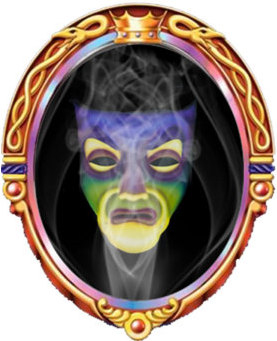
-The Magic Mirror- Charles Dance


As Tywin, Charles Dance portrayed the strongman of House Lannister perfectly. That charisma and sense of authority is ideal for being the voice of the all knowing Magic Mirror. Hearing the voice of Tywin tell his daughter that she's not pretty enough would also be very funny and reflect the problematic relationship the character of Tywin has with his children.