Sunday, July 26, 2026

Nolan's Odyssey- A Review and Comparison

As I seem to be averaging about one post a year on the blog, I figured I might as well make the first (and possibly only) entry of 2026 be a review of Christopher Nolan's version of the Odyssey. Whatever people have been saying about the movie (from those online who decided it was 'woke' before seeing it to those who just wanted to see a cyclops eat some bearded dudes in armor), the film has definitely made a "splash". As someone who read both the Iliad and the Odyssey this year(the English translations of Emily Wilson and Robert Fagles respectively), I wanted to type some thoughts out comparing Nolan's new film to the source material along with some of the historical connections to the Bronze Age that Nolan mentions in his adaptation. 

Before going into specific examples, I do want to say that I did enjoy the movie immensely. It's a great film and while it's certainly not 100% accurate to its material (at least one part of the material Nolan drew on which I'll get to later), I'm not a "purist" when it comes to screen adaptations of written texts. I'm also not aiming to spend a lot of time on the so called "casting controversies" as I'm pretty sure everyone has made up their mind whether the idea of having a black or trans actor in a role for this movie is a deal breaker for them or not. Based on the box office though it seems like most folks felt the same way I did on that particular issue. I'll also give a general spoiler warning for the movie in case you haven't seen it.  

So, as I play the composition "Forgotten Gods" from the Youtube channel Athena IV (bonus points if you can guess the connection there), hopefully the muse that Homer calls upon in his own works comes to me and my thoughts flow seamlessly from mind to finger to keyboard to screen.


The Greatest Similarities (Non-Linear Timeline and Zeus' Law) 

Like a number of people, I first thought Nolan was a "unique" choice for directing a film adaptation of the Odyssey. On the surface, the material seems very different from most of the other films he's done. Yet as soon as the movie started, I immediately understood why he was actually an ideal person to take a crack at retelling it. If you studied the story of the Odyssey in junior high or high school (as I did) then it's likely the versions, you read were arranged in a standard A to B to C to D structure. 

A (Trojan Horse) 

B (Odysseus gets lost/blocked from coming home)

C (Odysseus comes home) 

D (Odysseus kills the suitors and is fully and openly reunited with his wife and son) 

However, the original poem has a very different structure from this (one which Nolan's adaptation does a pretty good job of capturing and following albeit it with some changes). Like Nolan's film the story starts off with Telemachus and Penelope coping with the suitors in Ithaca. Odysseus himself does not become a POV character until a Book V of the story. Odysseus' then tells the story of his journey (though who he tells it to is different from the poem to the movie) before he journeys back to Ithaca. This non-linear structure for the poem is the aspect that I feel Nolan adopts the best to his version. He thrives at this kind of storytelling which you only have to look at his previous catalogue of films like Interstellar or Dunkirk to see. 

Alongside the timeline, the other aspect of the original poem that comes through the clearest is the emphasis on hospitality and Zeus' Law. The theme of hospitality and how one behaves as both a guest and a host are ideas woven in throughout the entire poem. Whether it's the suitors in Ithaca eating at Odysseus' family out of house and home for years or Odysseus' men entering the Cyclops's' cave, Circe's home, or eating the Sun God's cattle, the story is filled with examples of how bad guests/hosts behave and the consequences that follow from this behavior. While other film versions I've read about or seen have this element present, Nolan puts this aspect of the poem front and center, even directly mentioning the idea behind Zeus' law that treating strangers (particularly the downtrodden or the needy) well is important because they may be gods in disguise. This leads me to the two biggest differences (at least in terms of structure) that I noticed in the film. 


The Greatest Differences (Ambiguous Gods, the War, and a Hollywood Ending) 

Like any screen adaptation of a written work (especially one as old and as foundational as the Odyssey) differences are going to appear. Some things are dropped, some embellished, some added; even highly praised adaptations like Jackson's LOTR (or the first four to five seasons of GOT) do this. Among the variations in Nolan's Odyssey adaptation the three that stand out the most to me are as follows: the role/nature of the Greek gods in the story, the Trojan War itself, and the story's ending. 

In the texts that this movie draws on (the Odyssey, the Iliad, and the Aeneid) the Greek gods are not only very much real they're also active characters in the plot. They directly guide, aid, or hinder Odysseus and other characters in their respective journeys. Telemachus, Odysseus's son and heir, is routinely aided by the Goddess Athena who frequently disguises herself as his companion mentor. In the poem, the ambush laid by the suitors is thwarted by the goddess who warns Telemachus directly about plot. He then simply sails by a different route avoiding the ambush altogether (unlike in the movie). Likewise, Odysseus is directly aided by Athena and other gods along his own journey who appear to him (often in mortal disguise though not always). Poseidon also directly blocks him many times, particularly after his son the Cyclops Polyphemus is injured by him and his men. 

Nolan's movie, meanwhile, makes the Greek gods far more distant and ethereal. Many viewers have interpreted Athena's appearances to Odysseus in the movie as being just a pure manifestation of his own psyche. To them, this implies that the gods are simply not real within the context of the film. While I understand this interpretation, I feel as if the other supernatural elements present (the Cyclops, giants, sirens, Circe's magic, the Underworld etc.) don't lend themselves to this. I think it's more likely that the gods are distant but still present though whether the Athena that appears to Odysseus is truly the goddess in disguise or his trauma from the sack of Troy manifested is definitely still up for debate. 

In terms of trauma, Nolan's movie also recontextualizes the Trojan War as a whole. Rather than being, a war driven by the personal whims and grievances of the Gods (who in the Iliad are actively instigating, controlling, aiding and in some cases fighting on behalf of either the Trojans or the Greeks), the war in Nolan's adaptation is viewed as having been a conflict around trade routes and regional power politics. Agamenon in particular is singled out for his ruthless ambition and for using Helen's abduction (or escape) as a pretext for taking out a rival power. This is a far more modern view of the Trojan War which is more grounded and is also present in the 2004 "Troy" movie as well. Nolan goes a step further though revealing at the end of the movie that the deception of the Trojan Horse was itself the first violation of the law of Zeus in this universe and that it was this act that caused the gods to curse Odysseus and his shipmates and to begin the process of unraveling the order of the world in which they knew. The war itself is what sets off Odysseus misfortunes on his journey back not as in the poem (where Odysseus slighting the God Poseidon and his defiance of his preordained destiny). In this version, it's human failing and ambition that bring about the trials and suffering of the main character and his companions not the destiny set out by the gods. 

The final ending of Nolan's movie, following this revelation about the war and the defeat of the suitors, is also radically different from the poem. In Homer's version, Odysseus moves further inland, initially to confront the families of the suitors who are searching for revenge. Athena though once again intervenes and makes peace between Odysseus and the suitors' families. It's then that he travels to visit his father Laertes in the countryside where he reunites with him. While pretty much every film version of the Odyssey skips this epilogue ending (as storytelling wise it makes more sense to end pretty soon after Odysseus takes revenge on the suitors), Nolan's adaptation does something different by showing Odysseus and Penelope leaving Ithaca in the hands of their son while they travel West. It's a more happily ever after style ending in the Hollywood vein which also alludes to Greek colonization of the Western mediterranean in places like modern day Naples or Sicily. 


Allusions to History (Bronze Age Collapse and the People of the Sea) 

Historically, though, Nolan further includes other references to the Bronze Age, the period of time in which the Odyssey and the Iliad are believed to take place in. 

There are frequent mentions in the movie of the "People of the Sea" which is a reference to the actual "Sea Peoples" who appeared at the end of the Bronze Age in the Eastern Mediterranean. Though their origins are not 100% clear, the Sea Peoples were believed to have several different groups of displaced peoples from across the region who began resettling and invading established Bronze Age empires and kingdoms around 1200 BCE. They were the cause of a great deal of collapse and destruction in the region and contributed to the destruction of most Bronze Age cultures in that part of the world save for Egypt. 

The collapse of the Bronze Age is directly referenced by Odysseus as well towards the film's end though in the context of Nolan's film, it is Odysseus and his men who are both the Sea People and the ones who initiated the collapse of their world through the deception at Troy. 


Other Things I'd Like to Talk About 

For no particular reason and in no particular order, these are some other items I'd like to talk about related to the movie. Most of these are other differences between the source material and the film that stood out.

Sinon, played by Elliot Paige, is an interesting character to include in the movie as he only appears in the Aneid and not the Odyssey. Nolan appears to have relied on other sources besides the Odyssey to fill certain gaps in his film. Along with being the one to deceive the Trojans on the horse's real purpose (his role in the Aneid) Sinon in Nolan's movie also takes the place of Achilles in the underworld sequence (which is probably why so many netizens believed he was playing Achilles when the trailers dropped). My interpretation of this choice is that Sinon is meant to represent the "everymen" of Ancient Greece who were led to their deaths by leaders like Agammenon and Odysseus. This is an interesting contrast to the original poem as the superman "hero" of the Greek side, Achilles, is replaced by a minor "grunt" character who was simply trying to do right by their family, but who met a terrible fate due to the machinations of those in authority. 

Another interesting scene was where Telemachus makes it to Sparta and visits Menelaus and Helen at their court. While this does also happen in the original poem, Helen is very vocal in Homer's text about how happy she is to be reunited with her husband and to have been returned to Greece after her exile in Troy. Within the context of Homer's writing this appears to be her genuine feeling as Helen's decision to leave Sparta for Troy with Paris was once again directed by the gods. However, in Nolan's movie, Helen's demeanor and the visible scarring on her body, indicate that she is not happy with her return and is now a prisoner of her husband. There's also an implication that she was injured (either by her husband upon her recapture or during the sack of Troy) and that she bears a heavy burden of guilt for being the symbol of the war itself. 

Polyphemus, the Cyclops, is far more of a monster in the traditional sense compared to the myth as well. In the poem, Polyphemus has full conversations with Odysseus and his men (all while devouring them one by one). 

Calypso's island in Nolan's film is portrayed more like a sandy form of purgatory as opposed to her home in the poem which is described as a kind of island utopia where she lives in a palace with servants tending to their every need. The lotus flowers he eats are a nod to another (often removed) sequence in the story where Odysseus and his men find an island of people who are constantly in a stupor due to consuming lotus flowers. 

As a final note, despite the outcry over the casting of Nyong'o as Helen and Clytemnestra as not being historically or textually accurate, I'd like to point out that there is a (largely lost though still referenced) Greek poem called the Aethiopis which tells a portion of the Trojan War in which an Ethiopian king named Memnon and an Amazon warrior woman named Penthesilea lead armies to defend Troy and each duel Achilles before being defeated. I have a feeling though the "accuracy" cohort online would not be very pleased if these two characters actually made it into a modern film version of the Trojan War.  


Sunday, January 19, 2025

The Fight is Worthwhile in and of Itself- Harpers Ferry and DC Before Trump's 2025 Inauguration


The title of this post comes from a bit of wisdom I heard from progressive commentator Kyle Kulinski last year. As the start of a new Trump presidency has gotten closer it's something I've been trying to keep in mind; both for my own life and when it comes to thinking about the opposition liberally and progressively minded people will push for in the coming years. 

I thought a fair amount about this idea on a recent trip I took to the DC area and Maryland. I flew into Ronald Regan Airport (named after the person who laid the foundation for our current American political reality). Flying into DC from Memphis, Tennessee, was the first part of a journey to Westminster, Maryland to interview for a potential new job position in that area. Since the election results in November of last year, I've been applying to a number of jobs on the East Coast. While this is something my wife and I have felt for a while is better for us (for job and career opportunities, access to a more multicultural area etc.), Trump's election has added extra motivation for us to get out of the deeply red state we currently live in (Arkansas).  

As part of that process, a college in Maryland invited me to an in-person interview as a finalist and I chose DCA as the airport I'd use to travel the lion's share of the distance. I rented a car in DC (I received a free vehicle upgrade which gave me a larger vehicle than I had initially signed up for...thank you Camillo at Sixt in DC). After spending a few minutes figuring out the computer system for the Jeep Trailhawk, I got on the road. Traffic out of DC was not heavy and I made good time out of the city. It was cool to drive along the Potomac River and see the Washington monument sticking out of the center of DC itself. 

My chariot for the journey.

My first destination out of DC, was not the area where my interview was. Instead, I'd made a point to travel through the west of Maryland to visit the town of Harper's Ferry, West Virginia. I'd wanted to go to this historic spot in America for a while but had never had the opportunity. The town which sits in a unique position at the joining of two rivers and three states, is most famous for an 1859 raid led by abolitionist John Brown. Brown, a white abolitionist who was and is a controversial figure for the violent methods he used to fight against slavery, led a group of nineteen people in an attack on a government armory in Harpers Ferry. The goal of Brown's party was to obtain a large number of weapons that they could distribute to enslaved African Americans, starting a large slave rebellion in the South. The attack ultimately failed, and Brown and all his men were eventually captured or killed. Brown himself was executed publicly, and the raid and his death are seen now as important catalysts for the American Civil War that followed in the years after. 


John Brown


Today, Harpers Ferry is part of the US National Park service, which the town itself made up of restored historical buildings from the 1800s. Most of the museums, shops, and exhibits in the historical area of the town were closed the day I went (due to the late time of day I arrived and because of snowy weather that had hit the area, according to the park staff I spoke with). Nevertheless, I appreciated being able to walk around and see the sights connected to John Brown's raid. Despite the cold, it was gratifying to see his monument and see where the struggle he committed his life too and taken him. 


John Brown monument at Harpers Ferry


At a lookout point over the Shenandoah and Potomac rivers, standing in West Virginia with Maryland on my left and Virginia on my right, I thought about Brown and his raid. I thought about how unlike so many white folks in his time period, he went completely in on fighting for the emancipation of slaves, to the point where he even embraced racial equality (a concept which even among white people who opposed slavery at the time was not common). I thought about how he, and the people who followed him, had no idea if their raid on Harpers Ferry would succeed or not and how ultimately when it did fail, Brown was viewed by many as crazy nut-job who had wasted his life and failed to realize his dream of ending slavery. 


Harpers Ferry Lookout Point


Even in our modern-day environment, I'm sure many would argue Brown's goals have still yet to be realized. For all the progress made in the aftermath of the Civil War and the Civil Rights movement, we have so much left to do. And we as a country also seem hellbent on regressing in so many areas as we've embraced the politics or hatred and division. 

And yet, I also thought about the phrase I titled this piece with. How despite Brown and his comrades not knowing the result of their efforts, despite most of the society opposing one or all of their goals, despite their ultimate failure in sparking a rebellion in that moment to end slavery, what they did was still important and it was still worth doing. It would still be important even if they were not recognized today for their efforts. It would still be important even if the slavery that existed in their time hadn't ended in the coming years.  The fight they waged was good and noble and right in and of itself. That remains true, and constant in spite of whatever the ultimate result was. 

Coming to our own times, so many of us on the left or liberal side of things can feel as if we are in a John Brown type position in a second Trump term. The powerful institutions of the country have now largely swung onto the MAGA side of things, and it's made many of us opposed to MAGA's goals feel defeated and powerless. Yet I think examples like Brown's can be a guide for how to approach the coming years. However, we can resist Trumpism, it's important to remember the opposition in and of itself will be worthwhile. 

After Harpers Ferry, I made another hour plus drive to the town where my interview was. My focus had shifted away from John Brown somewhat to the meeting and evaluation I would be attending, where like basically everything in life, the results were uncertain. I did not have the best sleep that night. I'm a chronic over thinker and as I'm sure most can relate to, going in for intensive long interviews with potential new colleagues who may or may not be cool people to work with, makes me anxious. 

There were times as I tossed and turned in the King-Sized bed at the Best Western, where I seriously thought about bailing altogether despite traveling all that way to Maryland from Arkansas. Questions bombarded me like; Will things go well? Even if they do, what if they say no anyway? Am I wasting money and time to come here? Even if my wife and I move here will it be worth it? Will we regret it? 

And on and on, until I was able to calm myself somewhat with what I'd seen at Harpers Ferry. The fight is worthwhile in and of itself. Uncertainty is life and life uncertainty. That will be more of the case in the years to come. No results are guaranteed as much as we want them to be. 

The next morning, on about three to four hours of sleep, I went in and had a good interview experience. Results are still unknown as of now but ultimately, I was pleased I had followed through. After wrapping things up for the interview I made what turned out to be a very thick and traffic heavy journey back to DC, where I returned the rental car, checked into a hotel near Arlington, and where a few more surprises awaited me before I headed back West to Arkansas. 


My GPS took me into the heart of DC where I saw the sunset behind the Capitol Building.

Before going to Maryland for this interview, it occurred to me that I would be flying and staying in DC just a couple of days before Trump's second inauguration. I was curious how this would affect my time there and decided I would check out the White House and National Mall areas before I flew out of the city. 

DC is the city in the US I've visited the most over the years. I've been there seven times and have seen the majority of sites and museums in the National Mall area. One of the few places I'd not seen was Lafayette Square and the famous frontal view of the White House. Despite knowing that the inauguration preparations would potentially disrupt, my sightseeing I decided to make my way to the area by metro early in the morning. 

The statue of the Marquis de Lafayette in Lafayette Square.

The preparations for the inauguration and the handover of power between the Biden and second Trump administrations were in full swing. Barriers were up everywhere, and a larger number of vans and trucks were parked in and around the White House. Lafayette Square was still walkable but there were walls and barriers up all over. I walked to another side of the park where I could get a decent view (though not a very good photo) of the White House. Since it was quite cold, early, and a little rainy, there were not very many people out and about besides police, military, and security. There was, however, one woman in a MAGA hat who briefly struck up an exchange with me outside the White House after I had taken this photo (below) 


The White House two days before Trump's second inauguration.


We briefly chatted about our visits to DC, where she remarked that she had been at Trump's previous inauguration, but she had not seen the level of security that was being put up for his second swearing in. I commented something to the effect of "The times are a changing." before she said she was excited for the change that was coming. I politely excused myself because I was certain expressing my doubts about the next four years (or however long it winds up being) wouldn't do any good in that moment. 

I walked around the area for a while longer, taking note of moving vans parked around the White House, a large flock of Canadian geese hanging out in the Ellipse, and of course all the barriers that had been put up around and were waiting to be put up. 


It was wildly amusing to me that there were moving vans at the White House


I left around 8am, completely unaware that there would be a protest going on against Trump in the area a little later. According to the BBC around 5,000 people showed up out of an expected 50,000. That said, I felt satisfaction knowing that there were people that had turned up before Trump's return. The capitulations from powerful and wealthy figures in recent days to Trump can sometimes make it feel as if MAGA has won in a landslide. Like 99% of modern America believes 100% in everything he does and says. Yet despite the inauguration being just two days away, I didn't see all that many MAGA hats or public displays of Trumpism in DC. They were there, sure but those MAGA displays were few and far between. In the final count of the 2024 election Trump beat Harris by two million votes. Roughly 30% of the US population chose to vote for Trump. This is not a landslide and in the coming days it will be important to remember that an almost identical percentage of Americans voted for Harris and against Trump. He does not have a mandate. But even if he did, the fight is worth doing in and of itself. 


Friday, November 8, 2024

While Times Remains

This is the first I've written here in almost four years. It may be one of the last things I write for a while or for forever. The last post for this blog I wrote was in 2020 while I was still in South Korea. The pandemic was in full swing and the presidential election between Biden and Trump had yet to lose his reelection. My wife and I had not started the Green Card process, and I was at the beginning of my Master's Studies. 

Flash forward to today and I have that Master's degree. My wife has her Green Card and Trump is once again president. While so much went forward for me the US went backwards. 

So much has gone backwards globally in the past two years. The world I knew has changed, fundamentally in ways I profoundly feel but which I can't fully comprehend at least in this moment. What I do know is all of us, Democrat, Independant, Republican, MAGA, Christian, Muslim, Buddhist, Atheist, Jew, Gay, Bi, Straight, Man, Woman, Trans, Black, White, Hispanic, Asian, American, non-American, Documented and Undocumented; we're going to have a hard road ahead. It will be dark, it will be bitter, and destructive, and soul destroying. 

And, hey, maybe I will be proven wrong. Maybe by 2028 all of us are able to be in Trump's Golden Age. I'm 1000% open to that possibly and would gleefully accept it. 

But that won't be. It would be naive to pretend otherwise, especially for those of us who have opposed MAGA and Trump. The best-case scenario, frankly, is that he and his people are not as terrible to not as many people as they could. But, again, I think that won't be. 

I've lived in authoritarian states at different times of my life. I've seen how ugly it can get. But to have that authoritarianism on the horizon for the first time in my country of birth, is profoundly sickening and unnerving. 

I'm frightened for those of us outside MAGA. Those who don't have the privilege I have of being a white dude will suffer far more. But there is no good future ahead for anyone, at least for four years, and probably beyond. The America and the world order I knew and experienced in my travels is fundamentally, going, going and will soon be gone. Whatever will be in its place will not be not be what any of us want, including I believe most of who voted for Trump who will also be hurt by what he and his clique have planned. 

I am profoundly aware that with all the branches of the federal government under MAGA control, there will be nothing after January that will stop Trump from indulging in the worst of the worst of human cruelty. We're in there hands, from Florida to Oregon, to Arkansas to Ukraine, to Mexico, to Israel, to Gaza. Whatever they decide we will suffer from it. 

I, like many, am trying to figure out for myself and the ones I love what to do. Colleagues of mine already are planning to leave the red state we work in for a blue, coastal one for some semblance of protection from what's coming. 

We will try to do that ourselves very soon. We were planning to already but what has happened solidifies that we need to try our best to go somewhere But in truth the fascism (and yes, I will name it) that Trump embraces will spread across the world very soon too. Other right-wing parties across the world will feel profoundly emboldened and will be on the march to take control of their governments soon too. There is in truth, no safe haven, for anyone for what's coming and while I'm profoundly, utterly afraid in many ways, I am picking myself up shard at a time while looking back and looking forward. 

I am grateful for the life I've led up to this point. For the thirty countries I was able to see in 36 years. For the privilege of teaching students and helping them succeed as best I could. For completing a Master's Degree and for getting a job directly related to that field (which in truth, I fear may not be around for much longer due to Trump's return). For self-publishing one novel on Amazon and publishing a few articles here and there over the years. For meeting the love of my life and being able to marry and experience the world with them. For being blessed enough to give her a couple years away from work so she could recuperate. For the amazing parents and sisters and friends who have filled my life for joy. 

I am also looking ahead to the two to three months we have before the start of the darkness. A time to cherish what and who I have still profoundly. If I have one piece of advice to give all of you who are afraid of what's coming, it's this. Take these next few months and live as earnestly and passionately as you can. Love those around you. Make plans for how you can cope and be safe as best you can. Find a way to save the pieces of art and beauty that might be taken away after January. Steel yourself for the darkness and read about the dark times that came before. It's hard but it will help. Mourn for this loss for the US and the world. 

We have a long way to go. Darkness is coming, but we are the lights we seek. However small and isolated they may make you feel, you are, never have been, and never will be alone. Find a way to remember this yourself should the time come when there is nothing else left. I wish you well, I mean this more than I ever have, and for those I know or who I may never meet or know I'll leave you with a quote from one of my favorite quotes from one of my favorite films: 

"An inch. It is small and it is fragile and it is the only thing in the world worth having. We must never lose it or give it away. We must NEVER let them take it from us. I hope that whoever you are, you escape this place. I hope that the worlds turns, and that things get better. But what I hope most of all is that you understand what I mean when I tell you that, even though I do not know you, and even though I may never meet you, laugh with you, cry with you, or kiss you, I love you. With all my heart, I love you."


Saturday, May 16, 2020

Our Screaming Neighbor- A Scary Story


Scary Hallway- Will Hartl


A couple years ago, I got engaged to an amazing woman. My fiancé and I decided to move into a small studio apartment in her city. I had been working in a small town a few hours south of her when we first met and since we couldn’t see much of a future for us in my area I jumped at the chance to try on life in the big city. We found our studio in our second week of apartment hunting. We were looking for a small place to live in for a few months since we were just starting out and didn’t have much saved. It was a little cramped for two people but clean and in a convenient area close to her job and her parent’s home. The room was also remarkably cheap, especially because the surrounding neighborhood was home to a lot of doctors and medical schools. We jumped on the place and about a month after putting down the deposit we started moving in.

***

I was the first one who spent a night in our new place. I commuted to and from the city from the small town I had been working in every weekend for about two months before the wedding. My goal was to gradually move my stuff into our new place before my contract with my small-town job ended. The second or third weekend our new queen-sized bed arrived at the studio and I decided I’d spend Saturday night there rather than driving to my soon to be ex home in my small town on the same day.

My fiancé joined me for home cooked pasta (my specialty) at our new place before leaving to finish some work at her office. I felt bad that she had to work on the weekend and that we couldn’t spend a full night together, but I understood. After she left, I cleaned up, read a book and played a game on my laptop before I started to get drowsy. I tucked myself into the fresh, crisp sheets of our queen-sized bed, stretched out and within a couple minutes I was drifting off.
I was almost fully asleep when I was startled awake by a woman’s terrifying shriek. It was so startling that I sat fully up in the middle of the bed, eyes wide. I scanned desperately for the source of the noise. Yet there was no one. I wondered if I had experienced a lucid nightmare but some part of me knew that what I had heard was real.

Slowly, I got out of bed and after putting a jumper over my night-ware I decided to step out into the hall. In my mind, I was wondering if the scream had come from someone in another apartment. Was one of the neighbors in some kind of danger? I opened the door and stepped out into the white fluorescent light of the hallway. The doors to all the other studios on the floor were shut tight; the hall was empty. I stood alone for a few moments waiting to see if something would happen. It did. Another scream split the quiet. I flinched and tried to determine where the sound had come from. It sounded close but I just couldn’t tell what the source was.

Another minute or two passed as I waited to see if anything else happened, but nothing did. No one came out of their apartments and there were no other sounds. More confused at that point than fearful, I ducked back inside my studio. I tried to go back to sleep but all I could think about were those two random screams. The next day, I called my fiancé and explained to her what had happened. She thought the situation was strange too. She didn’t have any explanation apart from a neighbor having nightmares. I drove home late on Sunday and when I stayed in the apartment the next weekend all was silent at night.


***

At the end of October, I fully moved into the studio. I barely spent any time there over the next three weeks as I had to help my future wife move her stuff in and get ready for our wedding. We tied the knot in the middle of November and spent about a week on our honeymoon before we returned to our new home. While we had stayed in the studio off and on since I had heard those two screams, neither of us had experienced anything out of the ordinary during our nights there. We had completely erased the incident from our minds by the time we returned from our honeymoon.

Apart from our bed, the single room that made up our studio had one small table with two wooden chairs and a small shelf next to the kitchenette. Since my wife and I were both still young we hadn’t accumulated a mass of stuff yet to put in our place. Even so, we were squeezed together, but it didn’t bother us too much. We had started looking for bigger places to move into the next year.

A couple days after we got back from the honeymoon, I was at our table searching for apartments on my laptop. It was about midday on a Sunday and my wife was watching a program on our TV while lying on the bed. I had my headphones in, listening to Queen, when my wife suddenly sat abruptly up and turned off the TV.

‘What?’ I asked, as I took off the headphones.

My wife had barely opened her mouth when I heard it. A quick but heart skipping scream followed by a hard slam. We waited a few seconds in shocked silence before another scream split the air.
This time, we could tell that it was coming from the wall behind our TV. I got up and pressed my ear against the wall. No other noises or sounds came.

Since we assumed the noise was coming from the apartment next to us, we decided to check and see if our neighbor was ok. We went out into the hall and rang her bell a few times but there was no reply.
 
‘She’s probably going through some personal issues.’ My wife surmised. ‘Let’s just try and ring her later.’

We went back in and a few hours later we left to meetup with some friends for dinner.

***

Over the next three months, the screams continued. At first they came at random times but eventually they started happening mostly at midnight and at around three or four in the morning. They were always the same; loud, shrill and quick. They usually happened in clusters of three or four within ten minutes to half an hour of each other. We knew that our next-door neighbor was the source. Yet despite repeated attempts to contact the lady inside she never opened her door. She also didn’t respond when we started yelling back at her through our shared wall either.

We got so fed up that we went to our building manager to complain about the noise. He told us that none of the other people on our floor had complained about any screaming from that apartment and that the lady who lived there had, mostly, been a great tenant. He did admit that the lady had some severe mental issues that kept her from working and that she almost never received visitors. Her bills were paid by her grandmother who, though she was well enough off to care for her financially, didn’t have the heart to come and see her very often.

While we certainly felt bad for the girl, my wife and I were losing a lot of sleep. Unable to get our building manager to take any action we decided to ask some of the tenants on our floor if they would agree to help us force his hand. When we talked to three of our other neighbors though, they all said that they had never heard any screams from the room. They genuinely had no idea what we were talking about.

That baffled us but we guessed maybe since we were the only ones directly next to the screaming lady’s room that maybe we were the only ones that actually heard her. We decided the only thing we could do was speed up our search for a new home.

***

One night around the beginning of December, my wife went on a business. I was left on my own in the apartment for almost a week. I went to my day job and returned to the apartment only in the early evening. It was during those nights when I was home alone that I started hearing new sounds from next door. The screams continued but they were sometimes followed or preceded by the most maniacal cackles I’d ever heard. The woman’s laughter was as loud as the screams, but it lasted longer. Sometimes it stretched into almost half an hour of incessant, maddening laughs that rose and fell like some rumbling storm of insanity.

I became more frightened of the laughter than the screams. I lost more sleep and my condition got so bad that I seriously contemplated renting a hotel room until my wife returned. In the end, I opted for another solution. I started drinking more at night and it seemed to numb my sense enough to wear I was no longer bothered by the laughs or screams.

Then, the night before my wife was due to come home I drank almost half a bottle of whiskey and passed out early. I was and still am someone who doesn’t handle hard liquor well. I woke up around three am to vomit up everything I had swallowed earlier.

Our bathroom was close to the hallway, so as I clung to the toilet bowl like a dear friend, my ears picked up a sound coming from outside. The sound must have distracted me because my stomach immediately calmed. I listened intently from the bathroom floor. The sound I was hearing was a door opening. The creaking and squeaking were so slow but so loud that I could pinpoint whose door it was; our screaming, laughing neighbor’s.

As soon as I figured this out, I got up and softly went over to our table to get my phone. I had gotten a doorbell camera installed at our studio a few days before my wife left on her trip. I could turn it on using an app from my phone whenever I wanted. I switched it on and watched the feed as the camera turned on.

I waited, but all the feed showed was the empty hallway and the door of the studio directly across from ours. As I kept my eyes glued on the small screen in my hand I kept listening for new sounds. One minute passed and then another. The empty hallway looked back at me from my palm. It was like some invisible presence was daring me to make a move.


I was almost about to open the door when suddenly, the doorbell rang. I still couldn’t see anyone on the camera feed. I took a few paces back from the door watching the empty space in front of my door in shock as the bell rang a second time. I didn’t want to open the door.

Instead, I yelled in my angriest voice ‘What do you want?!’  

The feed abruptly went into static and I heard the screaming neighbor’s door slam shut. That was followed by the sound of two feet madly rushing back and forth across the floor of the next-door apartment.

I stood in frozen fear watching my empty wall as the pounding of the feet went on and on back and forth like an insane marathon. Then the screaming started again but this time it was different. Instead of the quick frequent bursts that had come before, this scream was one long continues shriek. I could follow it moving back and forth on the other side of my wall in rhythm with the feet.

I decided then and there that I’d had enough and called the police. I told them what had been going on for the last few months and told them that I needed someone there immediately. Of course, as soon as I had finished explaining the situation to the operator the running and the screaming stopped.

Two officers came to my door first along with the building manager. I opened the door for them. While the officers were initially skeptical of my claims because of the smell of alcohol in the apartment, when I explained that the neighbor had a history of mental illness they agreed to try and speak to her. They rang the woman’s door several times and identified themselves as officers. When there was no answer the building manager agreed to open the door for them. After it was unlocked the officers went inside, followed by the manager. I stayed in the hall.

Even though I was about an arm’s length away from the open door, the terrible, rancid smell that emerged from the room overwhelmed me and I nearly vomited again. The building manager emerged just a few seconds later. He stumbled into the hall and fell on his back against one other studio doors.

He fainted as I tried to attend to him. I heard the officers inside the woman’s room radio for a corner and an EMT. The manager had just come too when one of them stepped out and said that I would need to be questioned more and that officially, the woman’s room was a crime scene.

I spent the next couple hours in my apartment talking to detectives and investigators as forensics people and other officials entered the neighbors’ room. I told my story again and again to the detectives and while they didn’t suspect me of foul play, I knew they didn’t really believe me. Still, they eventually let me go saying that they would be in touch if they needed anymore information from me.

My wife arrived back home from her trip as soon as the investigators had finished talking to me and I hugged her tenderly for a while as I tried not to cry.

I wouldn’t find out the full story until the next week when I talked to the building manager who was still shaken from, he had seen and read some more details in the local news.

So, apparently when the officers and manager had entered the studio they had immediately found the young woman who had been renting the apartment dead in her bed. All around her were a series of manic suicide notes which she had scattered all over. Yet when the coroner was able to do an autopsy on the badly decomposed body he said he couldn’t find any proof that the woman had died from anything other than natural causes. To make it even more strange, he had determined that the woman had been dead since at least the beginning of October; meaning she had been lying dead in the flat for the entire time we had been living there.


Wednesday, May 13, 2020

Why Blind Skepticism Isn't Always the Smart Approach- The Many Realities of Covid-19


Brian Tyler Cohen on Twitter: "“COVID-19 IS A LIE” reads the sign ...

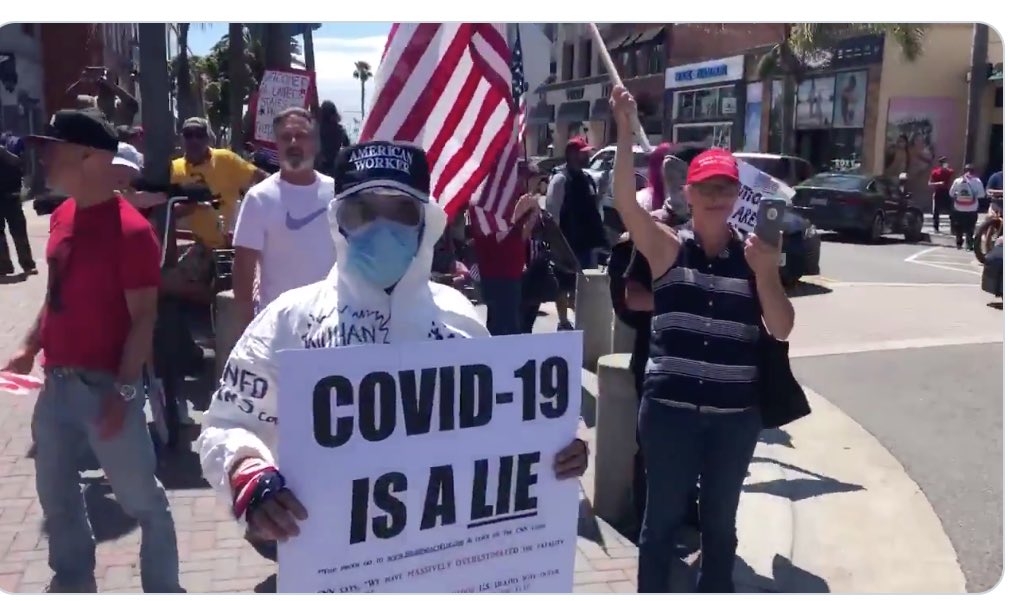
I’ve spent a great deal of time the last couple of months watching the US struggle with the Coronavirus from afar. I count myself lucky that I found myself in a country (South Korea) where the government’s and society’s response to the Covid pandemic was swift, comprehensive, and undoubtedly effective. While many people I know Stateside have needed to go into lockdown, stock up on supplies and socially distance (or else do work deemed essential and risk infection) my wife and I have not had our lives impacted to nearly the same extent. Apart from having the start of ours schools’ academic year pushed back, spending more time at home and spending less money because some our income was curbed, we’ve been able to live our lives with a great deal of normalcy, which can’t really be said for a lot of my fellow Americans.


It’s surreal to contrast the way the US has been impacted on this virus to the experiences of South Korea, and many other countries, who have dealt way more successfully with Covid-19. There are a lot of reasons for why the US is struggling so much. Certainly, the US has a larger population than many other countries and it is a very large global trade center. There’s also the matter of America’s extreme lack of adequate social safety nets in the form of affordable healthcare, an emergency UBI or unemployment system and lack of any kind of rent or mortgage freeze. It also hasn’t helped that US national leadership (not just the Trumpster Fire but also his administration) has botched the response badly, being slow to act in the beginning and then failing to provide adequate testing and essential medical supplies. Every subsequent failure of the US government gets deflected, especially from conservatives, onto China, even though the virus’ origin has no correlation to how widely it was allowed to spread inside the US once it made landfall. Both South Korea and the US had their first confirmed Covid-19 cases on the same day (January 20) yet in Korea we have yet (as of this date) to break 11,000 confirmed cases. That’s including the recent second wave outbreak that happened in Seoul recently. The US has almost 123 times the number of cases South Korea. It (America) does not have 123 times the population.


Yet out of all the factors that I think have contributed to America’s devastating struggle with Covid, there’s one that’s stood out to me a lot with the recent anti-lockdown protests and the viral surge of conspiracy theories. Fundamentally, Americans, even in what should be a very unifying moment of crisis, can’t agree on a single set of facts about the pandemic to base their reality on. The sheer volume of ‘information’ on the virus online and the vast number of narratives, counternarratives conspiracies and general bullshit about the Coronavirus means that Americans can absorb themselves into whatever version of the crisis suits their biases or desires. We’ve become so used to having our view of the world spoon fed to us through social media and a proliferation of ideologically polarizing media that we’ve made it impossible for us to see a single comprehensive but unified Covid-19 crisis. 


A lot of the time, the BS information about the virus and the effects of the pandemic has come from corporate media outlets with strong ties to one particular ideology or ‘alternative sources’ of information. Often these alternative sources of info are little more than a few memes online or a website that often fails to have any scientific or academic backing to the bogus data or arguments they are making. This includes videos like ‘Plandemic’ or the ‘Two Bakersfield Doctors’.


To me, the popularity of these kinds of conspiracies and alternative narratives goes hand in hand with the general lack of trust in any kind of ‘expertise’ or ‘authority’ that comes from what someone dubs ‘mainstream media’ or any kind of establishment institution. This isn’t just big media conglomerates like CNN or MSNBC. Even medical experts and scientists are being lumped in as part of the ‘establishment’.


Over the past few years, I’ve encountered more and more people who seem to have what I consider to be a blind distrust of any kind of establishment or mainstream worldview. On one level, I get where that skepticism comes from. It is important to be critical of any source of information, even if it’s one you trust. Large corporate media outlets and even universities can undoubtedly hold certain biases that influence the information they give. What’s always intrigued me though about people (especially online) who loudly and vocally criticize mainstream narratives or sources is that they often don’t apply that level of skepticism to the alternative sources they rely on. They don’t ask if maybe their blind skepticism of everything mainstream, is itself a kind of bias or cognitive dissonance and fail to see that a source or theory that has an alternative voice isn’t by default more authoritative or authentic.


The appeal of alternative sources also lies in the fact that they can, on the surface, seem more authentic and thereby more legitimate. Often, there’s something very raw about a seemingly ordinary person talking to you, directly through a Youtube video or a radio speaker. There’s something cool and unique when you find an obscure article in a corner of cyberspace that lends credence to a view a lot of people around you don’t take seriously. It gives us the sense that we are in on some special insight or knowledge when it comes to understanding the world. And in an individualistic society like America that’s a very appealing state of mind. You want to be seen as someone who’s both outside the norm but outside the norm because on some level ‘you get it’ more than your friends or family members who watch CNN do.


On some level I also think our recent infatuation with alterative sources is a product of our consumer culture. We live in societies now where our default setting is as a customer or a consumer. Everything is expected to be tailored to our every desire. Every time we order a dish at a restaurant we expect that if we’re not satisfied with something that the staff will do everything in their power to change their product so that it fits our desires. We’ve become so accustomed to the idea of ‘the customer is always right’ that now a lot of us feel justified in tailoring our media and information consumption to suit our own biases, prejudices and what we want to be true about the world. When we encounter a piece of information that counters or goes against the narrative that we’ve been telling ourselves about how the world works and how we work in it we feel justified in saying that’s ‘fake news’ or ‘the source is biased’ or ‘MSM lies’ because we’re the customer and by default we’re always right. If I want to believe the Chinese government deliberately started Covid-19 to destroy America I can. If I want to believe that Trump didn’t really mean what he said about injecting disinfectants and he was really referring to seemingly scientifically sound, I can. If I want to believe that Covid-19 isn’t actually very dangerous and or that the lockdown in the US is just an excuse to curb civil liberties and create a police state I can. I’m the customer and whatever worldview I want is right by default.


Obviously though, reality is reality. America leads the US Covid 19 cases and Covid 19 deaths. You don’t get to that place by having a great or even adequate plan to counter the virus in place. What we are seeing now in the US is the limitation of having multiple views on reality play out in the public space. What we are seeing is what happens when people trust their guts with something like a pandemic that requires trust in academic and professional expertise. What we’re seeing is that blind distrust of any and all kinds of authority is not the smarter or more rational position and that sadly a lot of people have died and will continue to die unnecessarily in the States because the ordinary person can’t bear to be wrong.

Monday, March 2, 2020

Thoughts From Coronacountry


Carrying on.


I live in Seoul, South Korea (as many of you know). I first heard of the Coronavirus while I was traveling in Vietnam at the end of January. The day I found out about it, I had come from visiting the Ho Chi Minh Mausoleum in Hanoi. There I had stood in line for a little over an hour with several dozen (maybe more) Chinese tourists.

When I read the news about the virus, my initial reaction was one of 'Wow, that's crazy' and little else. It was a big story but like most people who heard about Covid-19, it felt remote. Sure, I had rubbed shoulders with Chinese tourists but they probably weren't from Wuhan and they probably didn't have the virus. Besides, the media always hypes up things anyway.

For the next two days the story grew. When I flew out of Hanoi back to Incheon, all the customs and immigration officers in Vietnam and Korea were wearing masks. Posters explaining the symptoms of the virus were up in both airports. By the time I got back to my apartment, the virus felt more real but for the next few weeks the proximity to the danger I had felt in the airport faded. The remoteness returned. Covid-19 went back to being something on the periphery of my life.

A poster I saw in the Hanoi Airport.


That break only lasted a day or two as I quickly realized many Koreans were concerned about the virus. Some were so fearful of Korean citizens evacuated from Wuhan arriving in the country for quarantine, that they staged angry protests against the government and pelted officials with eggs.

Yet for the most part life continued for me. Sure, people around me were more fearful or concerned about the virus. Masks and medical supplies started running out in pharmacies. Some people I knew had travel plans interrupted. But for the most part things were as normal as they were before I left for Vietnam.

Then a large outbreak in Daegu (a city in central Korea) shot up Korea's rate of infections. Suddenly, the virus was more real than ever. My wife and I, both teachers, had the start date of our school year pushed back by several weeks. As the days went on fewer and fewer people could be see out and about in our neighborhood.

In about two weeks, Covid-19 went from a story I mostly saw through my screen to being something that I saw in the world around me. It was there in the massive stacks of groceries I saw being stockpiled outside local super marts for home delivery. It was in the empty spaces that started growing bigger and bigger on sidewalks and highways. It was in the darkened interior of cafes and restaurants shutting down earlier than they had before.


Home delivery boxes at a grocery store near my home.


By 'it' I'm not referring to the virus, but the shadow it and the attention around it have cast over people's thoughts and lives here.

As I've seen 'it' grow over the last few months becoming more and more real to those across the world, I've tried to hear out the two voices I hear whispering to me every time I click on a new article or see a new post. Those voices are- Be concerned, Don't panic.

The stronger voice was 'Don't Panic' in the beginning. It was a voice that reminded me of media hype and hyperbole, the dangers of social media exacerbating human emotions, the racism and prejudices that can be stoked into harmful actions when people don't pause and accurately asses the true danger something like the Coronavirus really possesses to them.

The closer the virus got to me, the more 'Be Concerned' grew in strength. As of last week, I only go outside with a mask on. My wife and I have made sure to buy plenty of them along with medicines. We've decided not to try and travel anywhere this year (despite how naturally travel hungry we are). Partly, this was out of concern for the virus itself but also because so many countries are now setting restrictions on travelers from South Korea.

'Be Concerned' reached its highest level last weekend when my wife came down with a fever. Thankfully, she recovered within a day and showed no other signs of the virus. Since she usually gets some sort of illness during the winter months, we felt safe concluding that she didn't have Covid-19. Yet it was the first time that we had to confront the serious possibility that we might both have to be quarantined.

After the brief scare of the fever, 'Be Concerned' has gradually become more even with 'Don't Panic' as I think it should be. I'm glad to be in Korea during this outbreak. I can access the high quality and highly affordable healthcare system of the country if I do get sick.

The extra time away from my full time job has given me plenty of time to read, write and watch some movies in the Netlflix queue. The atmosphere in my life is one of wait and see. Wait for the rates of infections to go down and then see how to move on from there.

In a way, technology and the internet have made self-quarantine easier than ever. While 'Be Concerned' and 'Don't Panic' ebb and flow depending on which article or mocking meme I click on, I'm certain that 'it' will pass and when 'it' does they'll be plenty of good things waiting on the other side.


Monday, February 17, 2020

Thoughts on the Shallow Traveler


“Travel is fatal to prejudice, bigotry, and narrow-mindedness, and many of our people need it sorely on these accounts. Broad, wholesome, charitable views of men and things cannot be acquired by vegetating in one little corner of the earth all one's lifetime.” -Mark Twain

"Romanticism, which encourages variety, meshes perfectly with consumerism. Their marriage has given birth to the infinite 'market of experiences', on which the modern tourism industry is founded. The tourism industry does not sell flight tickets or hotel bedrooms. It sells experiences. Paris is not a city, nor India a country - they are both experiences, the consumption of which is supposed to widen our horizons, fulfill our human potential, and make us happier." -Yuval Noah Harari 


Like a lot of people who have traveled frequently and or have lived abroad, I've heard Mark Twain's quote on how 'Travel is fatal to prejudice...'. Yet as I've gotten older, and as I've become more familiar with many kinds of tourists, I've become less certain that traveling in and of itself is enough to make people less narrow-minded and more wholesome in their views.

As someone who loves traveling and experiencing different cultures and countries, I feel so fortunate to be living in this time. It's never been easier for people (especially with Western and first world passports) to experience parts of the world that are different from the corner you come from. You can book flights, trains, hostels and tours with a few swipes of your fingers. 


At the same time, I've also begun to notice the shallower aspects of modern travel. Like most everything in our world of smartphones and social media, people seem less interested in experiencing something new and more focused on making sure they're seen experiencing it. Travel is less about a traveler seeing a place and more about a traveler seeing themselves in that place. (Thanks Jens Hieber for that great bit of wisdom ;) ) 

Getting the perfect selfie, finding the right monument, landscape or human backdrop that makes your gorgeous face seem adventurous, cultured and global. To an extent, everyone who travels does these things. I definitely have.

I also try my hardest though to dig, at least a little, into each country I visit. Sometimes I read a book about or set in that place. I watch a documentary or two. If I manage to break my introverted shell when I'm in a country, I'll ask some local people questions about their views on certain issues or topics. I delve into aspects of the local culture or nation that are not always particularly easy to talk about or insta-worthy. 

In my view, travel shouldn't have to be shallow in order to be a good experience. In fact, I find greater meaning in my travels when I confront a difficult issue that forces me to confront my feelings, prejudices or biases. 

On my recent trip to Vietnam, I made a point to visit a military cemetery for Vietnamese war dead (mostly from the Vietnam and French Indochina War) outside Hoi An. This small town near the coast, is an extremely popular place for foreign tourists. It has a well maintained old town near a river. That means it's easy to get great selfies and photos in exotic and clean looking surroundings while also shopping for souvenirs and good food from around the world. 

The military graveyard had not been something on my initial itinerary but because I was keen to learn more about the local angle on the Vietnam War I made a point to go. I was especially intrigued because I could find very little detailed information on the cemetery online (at least in English).

I found a ride from the old part of town pretty quickly and within ten minutes I was at the cemetery. During the fifteen to twenty minutes I spent there, I was the only visitor. When I left I couldn't help but feel melancholy. I was sad not just because of the heavy atmosphere the cemetery conveyed but also because I knew how overshadowed this place was by the way more selfie-genic streets of Hoi An which were just a few minutes away. Out of the hundreds of foreign tourists I had seen taking photos in the market and at the riverside, I would have thought at least a few would have bothered to come over.

None of this to attack Hoi An. It's a very cool place. I would easily go back there. I myself took a lot of photos in the old town and I could easily spend more time in that part of Vietnam if I had the chance. It just saddens me that so many travelers don't want to see and learn more about the places they are wandering through. While traveling has never been easier, it's also never been easier for tourists and foreigners outside their home countries to insulate themselves from the people, history and places they visit.

When people think of a 'clueless-tourist' the image that often comes to mind is of an older person who stays in a resort on the beach in a developing country, never leaving except on a guided tour to a famous monument or a tourist market; every aspect of the program tailored to their cultural norms and personal whims. 


I think though, there are many ways tourists can fall into having shallower and more insulated experiences than they might think. Hostels and backpacker restaurants and bars can be just as much of a bubble as a luxury resort. A twenty something who goes to the south of Thailand and gets drunk every night while lying on a beach everyday with people from their country will not really understand anything about the lives of Thai people who have to try and make a living there. A young French and American couple, who get frustrated with local people begging for money in Vietnam, but won't ask how they're countries' bloody and vicious history in Vietnam contributed to those people's lives. 

As such, they may come back to their home countries with a lot of experiences but will they be the kind of experiences that really make them understand the world more? Will they question themselves, their previously held beliefs and their place in the wider world? Will they learn how to be better and conscientious consumers of the countries they visit in the future? 

In some ways, I'm sure they will. However, when I look at how many prejudices and narrow minds pervade and flourish in our globalized interconnected world, I can't help but think that travel itself is only eye opening if you are willing to open them yourself.